
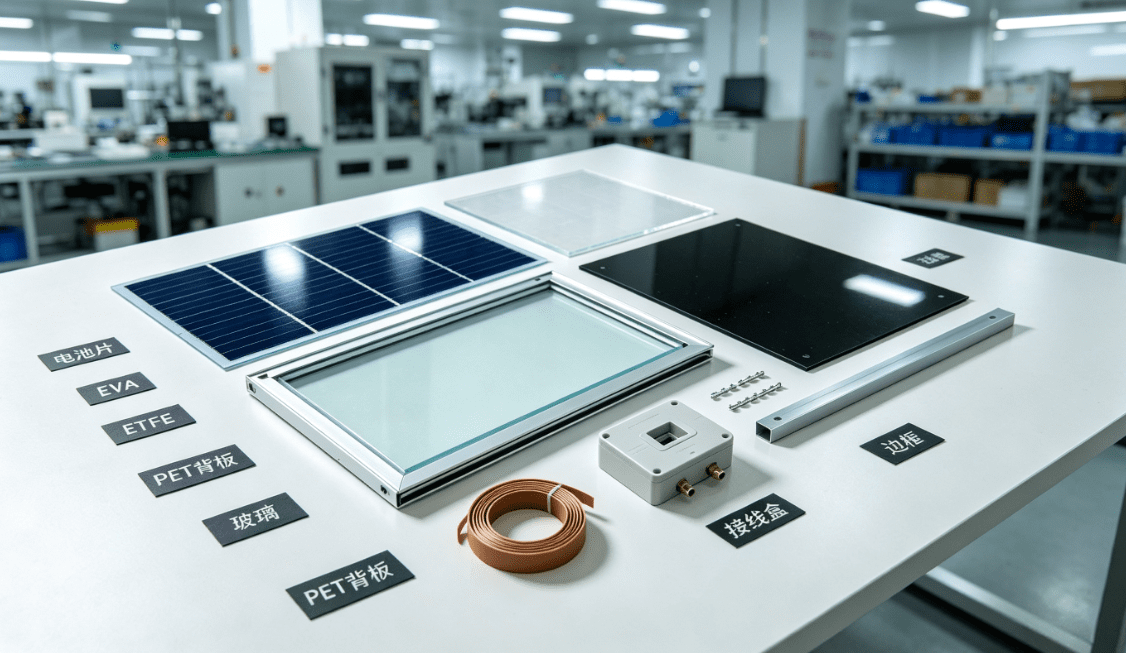
In off-grid power applications such as smart agriculture monitoring, remote IoT terminals, forest fire prevention equipment, portable energy storage, and river water quality monitoring, the demand for custom small-scale solar panels is growing steadily. However, when sourcing these components, many engineering contractors and system integrators encounter a frustrating reality: identical wattage solar panels can have price discrepancies ranging from 30% to 80% among different manufacturers.
While many procurement professionals mistakenly attribute this gap solely to brand premiums, they often overlook the underlying logic involving raw material selection, encapsulation processes, and production standards. There is no universal guide price for custom solar panels. Instead, pricing is determined by a combination of material systems, manufacturing routes, customization requirements, and order conditions. This comprehensive guide breaks down the cost structure from the perspectives of materials and manufacturing, providing parameter comparison tables to help buyers benchmark quotes accurately and avoid the severe project risks associated with low-quality, low-cost solutions.
1. The Core Power Unit: Solar Cell Selection as the First Cost Watershed
Solar cells are the heart of a PV panel, accounting for the highest proportion of raw material costs and serving as the primary source of price variance.
The custom small-panel market is dominated by monocrystalline and polycrystalline silicon cells, further categorized into Grade-A authentic cells, Grade-B cells, downgraded cells, and broken fragments. Monocrystalline cells offer higher conversion efficiency, meaning a smaller footprint for the same wattage—ideal for space-constrained IoT devices—but their raw material procurement costs are higher than polycrystalline. Standard-sized cells benefit from mass automated production, keeping unit prices low. Conversely, custom non-standard sizes or irregular cuts generate significant cutting losses, driving up waste and labor costs.
Many low-cost solutions utilize Grade-B or downgraded cells. These cells harbor hidden cracks, black spots, or grid line defects. While they may barely meet initial power output standards, their power degradation accelerates rapidly in long-term outdoor use. For unattended remote projects, using downgraded cells leads to frequent power failures within 1–3 years, making subsequent maintenance and equipment replacement costs far exceed the initial procurement savings.
2. Encapsulation Material Solutions: Three Routes Defining Cost and Lifespan
The encapsulation structure directly determines a solar panel’s waterproofing, UV resistance, and weatherability, making it the most critical differentiator in project selection. The three primary routes—PET epoxy potting, ETFE flexible encapsulation, and tempered glass lamination—see progressive increases in both raw material costs and processing difficulty.
| Comparison Dimension | PET Epoxy Potting | ETFE Flexible PV | Tempered Glass Lamination |
|---|---|---|---|
| Surface Material | Epoxy resin potting | ETFE fluoroplastic film | High-transmission tempered glass |
| Base Material Cost | Lowest | Medium to High | Highest |
| Core Equipment | Simple potting machines | Laminating machines, small presses | Large-scale high-temp lamination lines |
| Theoretical Outdoor Lifespan | 1–3 Years | 5–8 Years | 10–15 Years |
| UV Resistance | Poor (prone to yellowing/delamination) | Excellent (anti-aging) | Exceptional |
| Mechanical Properties | Slight bendability, fragile | Moderately flexible (fits curves) | Fully rigid, high impact resistance |
| Waterproof Rating | Basic IP65 | IP67 | IP65/IP67 |
| Typical Application | Indoor, prototype testing | RVs, portable, curved carriers | Long-term unattended outdoor stations |
Under the same wattage, the cost ranking is: Tempered Glass Lamination > ETFE Flexible > PET Potting. Many buyers only compare power parameters and ignore encapsulation differences, leading to severe quote mismatches and the costly scenario of “low-cost solutions failing in batches after a year or two.”
3. Auxiliary Materials: The Overlooked Hidden Costs
While buyers focus on the panel surface, auxiliary materials like backplanes, frames, cables, and connectors are often ignored. Yet, variations here significantly impact outdoor operational stability and pricing.
Backplane Materials: Standard PET backplanes are cheap but offer weak moisture resistance, leading to delamination in humid environments. TPT composite weather-resistant backplanes provide superior hydrolysis resistance and insulation, extending outdoor lifespan but at a higher procurement cost.
Aluminum Frames: Glass panels use either thin recycled aluminum or thickened, anodized virgin aluminum. Recycled aluminum deforms easily and has poor salt-spray resistance. Thickened anti-corrosion frames are necessary for mountainous or coastal environments, increasing costs. Frameless flexible panels eliminate this cost entirely.
Cables and Terminals: Standard PVC cables are the cheapest, while low-temperature, anti-aging Teflon cables are premium. Custom connectors (e.g., PH2.0 or aviation waterproof plugs) require additional procurement, crimping, and waterproof potting, adding to labor and material costs.
Sealing Processes: Simple surface caulking is cheap, whereas full polyurethane potting or silicone rubber sealing achieves higher waterproof ratings but requires more expensive materials and labor.
4. Manufacturing Processes and QC Standards: Same Materials, Different Costs
Even with identical raw materials, differing production processes and QC standards create massive cost disparities. The market is divided between rudimentary workshop processing and standardized industrial mass production.
| Production Mode | Basic Investment | Process Flow | QC Items | Comprehensive Cost | Product Risk |
|---|---|---|---|---|---|
| Manual / Workshop | Extremely low equipment investment | Manual soldering, simple potting | Superficial visual inspection only | Low | High risk of cold solder joints, power deviation, and water leakage |
| Standardized Industrial | Laminators + EL + IV testers | Sorting → Auto-soldering → Encapsulation → Aging → Final inspection | EL, IV, Aging, Waterproof spot checks | Higher | High consistency, low defect rate |
A complete QC process increases equipment energy, labor, and time costs but effectively filters out hidden cracks and cold solder joints. Skipping EL testing and power-on aging is the most common method low-cost products use to compress expenses. Furthermore, special customizations (irregular holes, non-standard sizes, back-brackets, silk-screen logos, ultra-thin profiles) require new tooling and layouts, increasing production losses and unit prices.
5. Order Conditions: Volume, Lead Time, and Certifications Adjust Final Pricing
Custom PV panels are non-standard products, meaning commercial terms directly influence manufacturer quotes:
Procurement Volume: Large orders secure bulk raw material discounts and amortize R&D/tooling costs across many units. Small batches or samples cannot enjoy these economies of scale, resulting in higher per-unit prices.
Delivery Lead Time: Standard orders fit into regular production schedules. Rush orders require priority line adjustments, usually incurring a premium. Frequent design changes also cause repeated line debugging and extra losses.
Third-Party Certifications: Domestic projects may not require them, but export or large-scale bidding projects demand CE, RoHS, or IEC test reports. Third-party testing fees are ultimately reflected in the quote.
Warranty Agreements: A 1–2 year short-term warranty allows for economical material configurations. A 5–10 year long-term warranty mandates high-weatherability cells, encapsulants, and backplanes, drastically raising raw material standards.
6. Practical Sourcing and Benchmarking Advice
When comparing quotes from multiple manufacturers, never compare unit prices blindly. You must lock in unified standards for benchmarking. Key checkpoints include:
- Confirm cell type (monocrystalline/polycrystalline) and grade (Grade-A authentic only; reject downgraded fragments).
- Clarify the encapsulation scheme (PET potting / ETFE flexible / Tempered glass lamination).
- Specify backplane, cable, and connector models, along with required waterproof ratings.
- Demand QC documentation: Confirm the presence of EL hidden-crack detection, power sorting, and aging tests.
- Get warranty terms and failure criteria in writing.
For indoor short-term prototyping on a tight budget, PET potting is acceptable. For curved portable devices, prioritize ETFE flexible components. For multi-year unattended outdoor monitoring, always opt for tempered glass laminated PV panels. The short-term procurement savings are never worth the travel expenses and equipment downtime caused by mass field failures.
Conclusion
The price of a custom solar panel is never determined by wattage alone; it is a comprehensive cost system. Cell grades set the baseline cost, encapsulation schemes define the price bracket, auxiliary materials dictate long-term reliability, and manufacturing/QC standards determine product consistency. Order volume, lead time, and certifications act as floating adjustment factors.
Engineering contractors and integrators should demand clear Bills of Materials (BOM) and process descriptions from suppliers to ensure apples-to-apples comparisons. Prioritize source factories with complete production lines and comprehensive testing equipment. By matching the right solution to the project’s lifespan and environmental conditions, you can achieve the lowest total cost of ownership over the system’s lifecycle.