
The domestic solar panel market is saturated with thousands of suppliers, offering prices that range wildly from a few cents to several dollars per watt. As a buyer, you’ve likely asked: Why do identical-looking products have such massive price differences? And more importantly, how do I find a genuine source factory instead of a middleman?
While trading companies can sometimes offer value for small, multi-category orders, buying directly from a real manufacturer ensures better pricing, transparent quality control, and reliable after-sales support. This guide outlines 5 actionable methods to help you filter out the middlemen and secure a trustworthy solar component supplier.
1. Verify Production Qualifications: Factories Are Proven, Not Promised
A genuine source factory must possess a complete production line and testing equipment. Don’t just take their word for it; request verifiable proof:
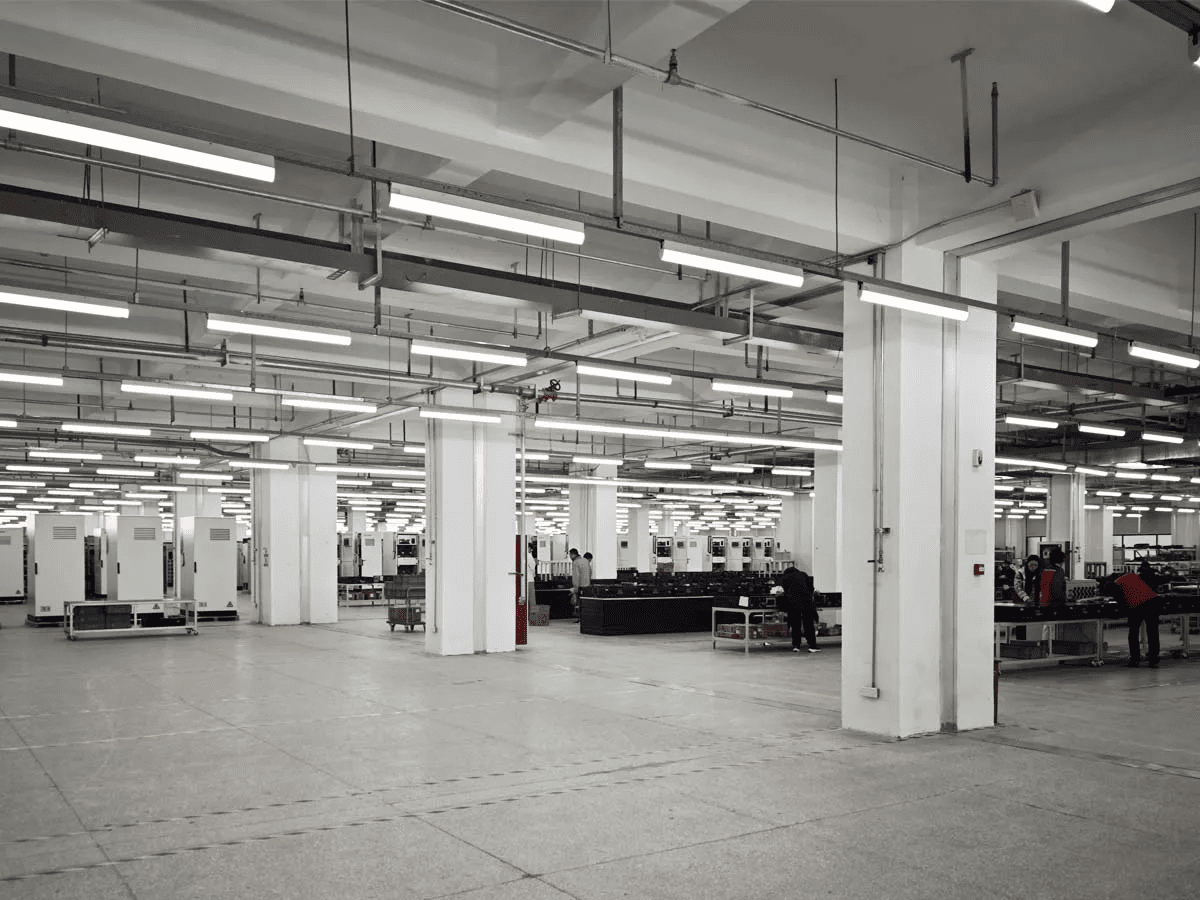
- Factory Tour Videos: Ask for a continuous, unedited video showing the entire workshop floor, not just a staged showroom or warehouse.
- Core Equipment List: A real factory will have layer laminators, EL (Electroluminescence) testers, and flash testers. If they can’t list their equipment, they aren’t manufacturing.
- Certifications: Verify their ISO9001 Quality Management System on official government databases. Check for international product certifications like CE, RoHS, and TÜV.
Red Flag: If a supplier can only provide office photos or generic stock images, they are highly likely to be a trading company.
2. Compare Prototyping Speed and Technical Collaboration
Real factories have in-house engineering teams and rapid prototyping capabilities. Standard samples should take 3–5 days, while custom non-standard designs take 7–10 days. During this phase, a factory engineer will provide professional advice on size optimization, encapsulation processes, and balancing efficiency with cost.
Conversely, trading companies often only provide quotes. If you ask a technical question and get a vague answer like, “Let me check with the factory,” or if the sample takes over 15 days, consider it a major warning sign.
3. Analyze MOQ Flexibility and Price Transparency
Source factories are usually flexible with Minimum Order Quantities (MOQ). They are often willing to accommodate small batches (e.g., 10–50 pieces) for testing, albeit at a slightly higher unit price. More importantly, their pricing is transparent. A real factory will break down costs: solar cell grade and origin, encapsulation material brands (e.g., ETFE/PET suppliers), junction box brands, and packaging costs.
Trading companies typically offer vague “market prices.” When a quality issue arises, they cannot trace the problem back to a specific production batch or material.
4. Conduct On-Site Inspections or Live Video Audits
For procurement orders over $10,000, an on-site visit or a live video audit is non-negotiable. Focus on:
- Workshop Cleanliness: Encapsulation processes (like ETFE/PET lamination) require highly clean environments.
- EL Testing Procedures: This step detects micro-cracks that directly impact the panel’s lifespan.
- Aging Tests: Ensure they perform thermal cycling and damp-heat tests.
- Warehouse Management: Check shipping records and inventory organization.
Note: Reputable manufacturers, such as Shanghai Geningtech, actively welcome clients to visit their Jiading factory to witness the entire production process firsthand.
5. Evaluate After-Sales Service and Technical Support
A true source factory acts as a long-term partner, offering:
- Technical Consulting: Guidance on system matching and installation.
- Clear Warranties: Standard warranties of 5–10 years for ETFE/glass panels, and 2–3 years for PET/epoxy panels.
- Rapid Response: Technical inquiries answered within 24 hours.
- Batch Traceability: Ability to trace every panel back to its exact production date and EL test records.
Trading companies, lacking direct control over production, often delay responses or shift blame when defects occur.
Quick Reference: Source Factory vs. Trading Company
| Feature | Genuine Source Factory | Trading Company / Middleman |
|---|---|---|
| Proof of Production | Live video of assembly line, EL testers, laminators | Showroom photos, warehouse shots, or stock images |
| Technical Support | In-house engineers provide instant, detailed feedback | Delayed responses; relies on third-party factories |
| Pricing Structure | Transparent breakdown (cells, materials, labor) | Vague “market price”; hidden markups of 20-30% |
| Prototyping | Fast (3-10 days); offers engineering optimization | Slow (>15 days); lacks technical customization |
| Quality Control | Full traceability, EL testing, aging tests | Relies on supplier’s word; hard to trace defects |
| After-Sales | Direct warranty support, 24h response time | Often unresponsive; shifts blame to the actual factory |
Conclusion
Investing time in front-end research to find a genuine source factory is far more cost-effective than dealing with cheap, unreliable products that require expensive project remediation later. By verifying qualifications, testing technical collaboration, demanding price transparency, conducting audits, and evaluating after-sales support, you can confidently secure a solar supplier that guarantees both quality and value.