
In the STEM (Science, Technology, Engineering, and Mathematics) classroom, the most thrilling moments happen when students witness abstract theories transform into real-world power. However, when it comes to solar photovoltaic experiments, traditional glass-encapsulated solar panels often become a “hidden hazard” in teaching—they are not only fragile but also pose risks of cuts and electric shocks, leaving teachers anxious during hands-on practice. Specially designed safe and durable photovoltaic modules are born to completely solve this pain point, and they are rapidly becoming the top choice for classroom solar experiments with their exceptional safety and reliability.
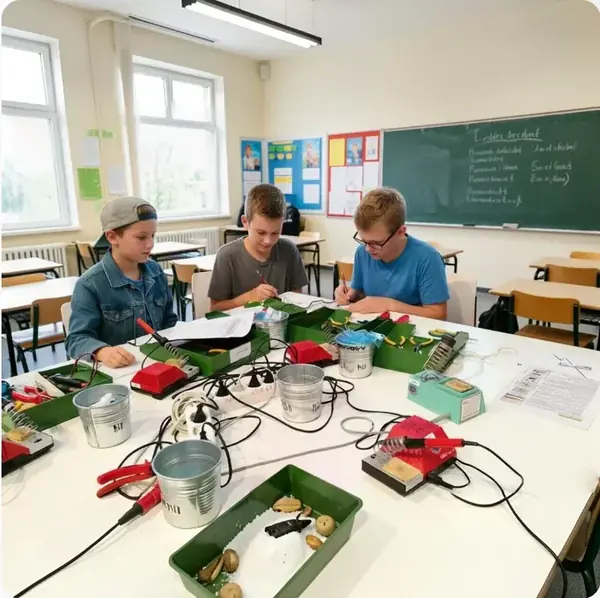
Saying Goodbye to “Glass Hearts”: Redefining Classroom Safety
In a traditional physics or science lab, using glass solar panels for experiments is like defusing a bomb. If a student drops or bumps the panel by accident, not only will the expensive equipment be instantly destroyed, but the flying glass shards could also cause serious physical harm to the students.
STEM solar modules designed exclusively for educational settings completely overturn this situation. They abandon fragile glass materials, opting instead for high-strength epoxy resin or specialized engineering plastics for fully sealed encapsulation. This “glass-free” design gives the modules incredible impact resistance. Even if they are accidentally dropped from a desk or stepped on by a student, they remain intact. This rugged, “drop-proof” attribute not only significantly reduces equipment loss costs for schools but, more importantly, completely eliminates teachers’ worries about classroom safety accidents, allowing every hands-on experiment to truly let students explore freely and return to the essence of discovery.
The “All-Rounder” for Learning Through Play: Seamless Transition from Theory to Practice
An excellent educational solar panel is never just a power-supplying “battery”; it is a “micro-laboratory” integrated with rich teaching functions.
In classroom applications, these modules are typically designed as highly integrated experimental platforms. They not only support basic circuit connections like series and parallel setups—allowing students to intuitively understand the changing rules of voltage and current—but also feature standardized testing ports. This makes it convenient to connect multimeters or oscilloscopes to monitor photoelectric conversion data in real-time.
More importantly, these shatterproof solar panels can perfectly adapt to various STEM solar kits. Whether it is assembling a solar car, building a miniature water pump, or designing a solar-tracking device, these modules provide stable and safe power output. They make the abstract “photovoltaic effect” tangible, allowing students to “learn by playing and doing,” and deeply understand the operating logic of clean energy.
Ultimate Durability and Consistency: Escorting High-Frequency Teaching
School teaching equipment faces high usage frequencies and complex storage environments. A module used by students in the first period today might be disassembled and reassembled by another group tomorrow. Therefore, the durability of educational solar panels is crucial.
Beyond physical drop resistance, these modules are specially optimized in their electrical performance. They feature excellent reverse-connection and short-circuit protection. Even if students make wiring mistakes, the modules won’t burn out. At the same time, to adapt to the lighting conditions of different classrooms, these modules are usually paired with high-brightness simulated light sources for use, ensuring that experimental results are not limited by weather or time, guaranteeing the consistency and repeatability of teaching.
From the “glass-free” design that eliminates safety hazards, to the interface layout that supports diverse experiments, and finally to the durable materials that adapt to high-frequency use, safe and reliable photovoltaic modules built specifically for STEM education are empowering the classroom with the power of technology. They are not just power-supplying components; they are the “safe foundation” for igniting students’ scientific dreams and cultivating future engineers. In an era where green energy is becoming increasingly important, let every child be able to safely touch the power of the sun in a secure environment.